Are there theoretical principles that have the power and generality that we have come to expect in physics, yet encompass the complexity and diversity of life’s most beautiful phenomena?
Theoretical physics is the search for simple and universal mathematical descriptions of the natural world. Much of biology, in contrast, is the exploration of the complexity and diversity of life on earth. For some this difference in intellectual traditions is evidence that we will never understand the living world in the way that we understand the rest of physics. For me, the contrast is a source of creative tension.
A little about science…
Not so long ago I had the opportunity to write a brief perspective about the emergence of modern biological physics, for APS News.
I have long been interested in the ability of living systems to function near the limits of what is allowed by the laws of physics. The goal is not just to demonstrate (near-)optimality, but to promote this to a principle from which key features of biological function and mechanism can be derived, with no free parameters. Lectures in Les Houches gave me the chance to review these ideas, focusing on information flow through a genetic network but also providing context for how the same ideas apply to information flow through networks of neurons.
Life is more than the sum of its parts, and some of the most exciting phenomena in living systems emerge from interactions among many microscopic constituents. It is an old dream of the physics community that we can describe these emergent phenomena in the language of statistical mechanics. Perhaps the most developed examples of this thinking are about neural networks. The landscape for theorizing about networks of real neurons has been changed, dramatically, by the development of new experimental methods. Leenoy Meshulam and I recently reviewed how we can connect to these data, in quantitative detail, using maximum entropy methods, the renormalization group, and more.
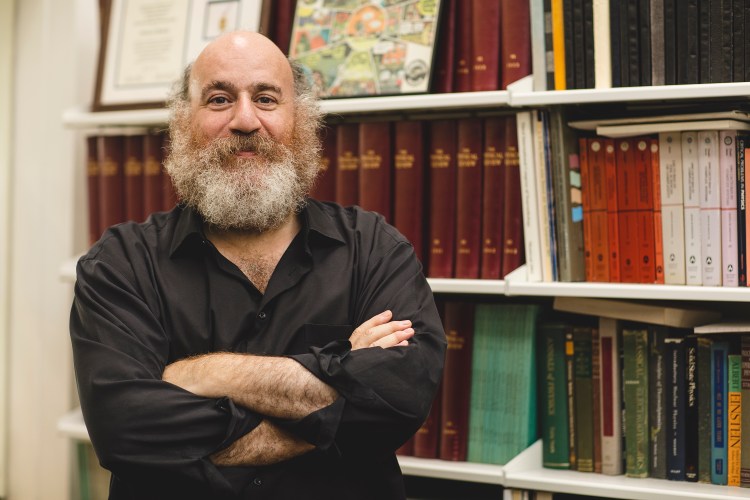
Current Appointments
John Archibald Wheeler/Batelle Professor of Physics, and
Lewis-Sigler Institute for Integrative Genomics
Princeton University
Co-Director
Center for the Physics of Biological Function
Visiting Research Scholar
Initiative for Theoretical Sciences
The CUNY Graduate Center

